Why Your First Step Matters
For many residents in Sydney’s Inner West and Northern Suburbs, the day doesn’t start with the smell of coffee, but with a sharp, searing pain in the base of the heel. That first step out of bed—the one that makes you limp to the bathroom—is the classic hallmark of Plantar Fasciitis.
At Walk This Way Podiatry, we believe that heel pain is not just a “part of getting older” or an inevitable result of being active. It is a biological signal that your foot’s structural integrity is being overtaxed. Whether you are a weekend warrior running the Bay Run, a busy professional commuting to the CBD, or a parent chasing kids around Putney Park, heel pain stops you from living your most “active life.”
This guide explores the root causes of heel pain, why common “home fixes” often fail, and how our clinical approach in Putney and Haberfield provides long-term resolution.
Understanding the Anatomy of Your Pain
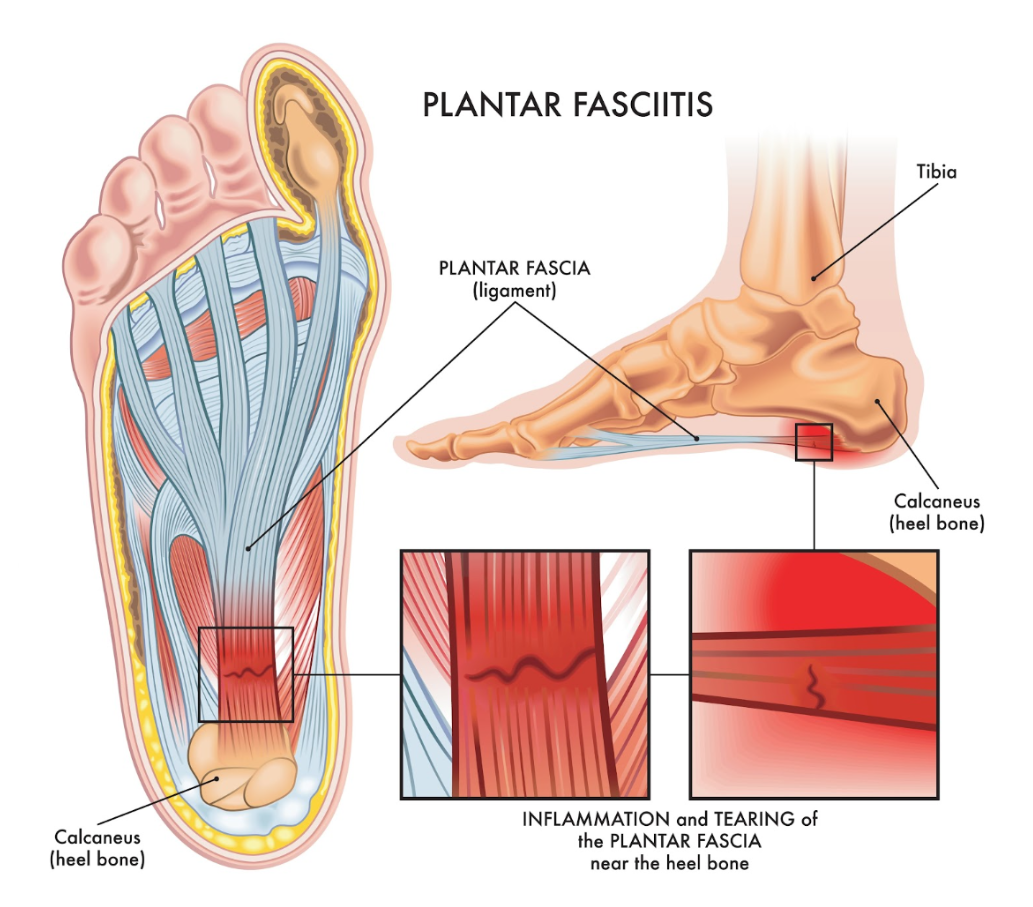
To solve a problem, you must first understand the machinery. The Plantar Fascia is a thick, fibrous band of connective tissue that runs along the sole of your foot, connecting your heel bone (calcaneus) to your toes. Its primary job is to support the longitudinal arch of your foot and act as a shock absorber.
When this tissue is subjected to repetitive stress, micro-tears occur. Contrary to popular belief, chronic cases are often Plantar Fasciosis (degenerative) rather than Plantar Fasciitis (inflammatory). This distinction is vital: if your podiatrist treats a degenerative condition with anti-inflammatories alone, the pain will keep returning.
If you are suffering from heel pain, book an appointment today.
Beyond the Fascia Other Causes of Heel Pain
While Plantar Fasciitis is the “usual suspect,” our diagnostic process also screens for:
Heel Spurs
Bony protrusions on the underside of the heel bone.
Achilles Tendonitis
Pain at the back of the heel where the tendon attaches.
Fat Pad Atrophy
The loss of the natural cushioning under your heel.
Bursitis
Inflammation of the small fluid-filled sacs that cushion the joints.
Tarsal Tunnel Syndrome
Compression of the posterior tibial nerve (similar to Carpal Tunnel but in the foot).
The Agitation The Hidden Cost of Ignoring Heel Pain
The human body is a master of compensation. When your heel hurts, you instinctively change the way you walk (your gait). You might roll your foot outward, shorten your stride, or put more weight on your toes.
This “antalgic gait” might provide temporary relief for the heel, but it shifts the mechanical load to joints that aren’t designed to handle it. Over months, untreated heel pain often leads to:
Secondary Knee Pain
Due to internal rotation of the leg.
Hip Misalignment
As your pelvis tilts to accommodate a shorter stride.
Lower Back Strain
Resulting from a loss of shock absorption.
Chronic Calf Tightness
Which further pulls on the heel, creating a “pain loop.”
Our "Root Cause" Clinical Pathway
When you visit our Putney or Haberfield clinics, we follow a rigorous four-stage process to ensure we aren’t just treating the symptom, but fixing the engine.
Comprehensive Biomechanical Assessment
We start with a deep dive into your history. How long has it hurt? What shoes do you wear for work? We then perform a physical assessment of joint range of motion and muscle strength.
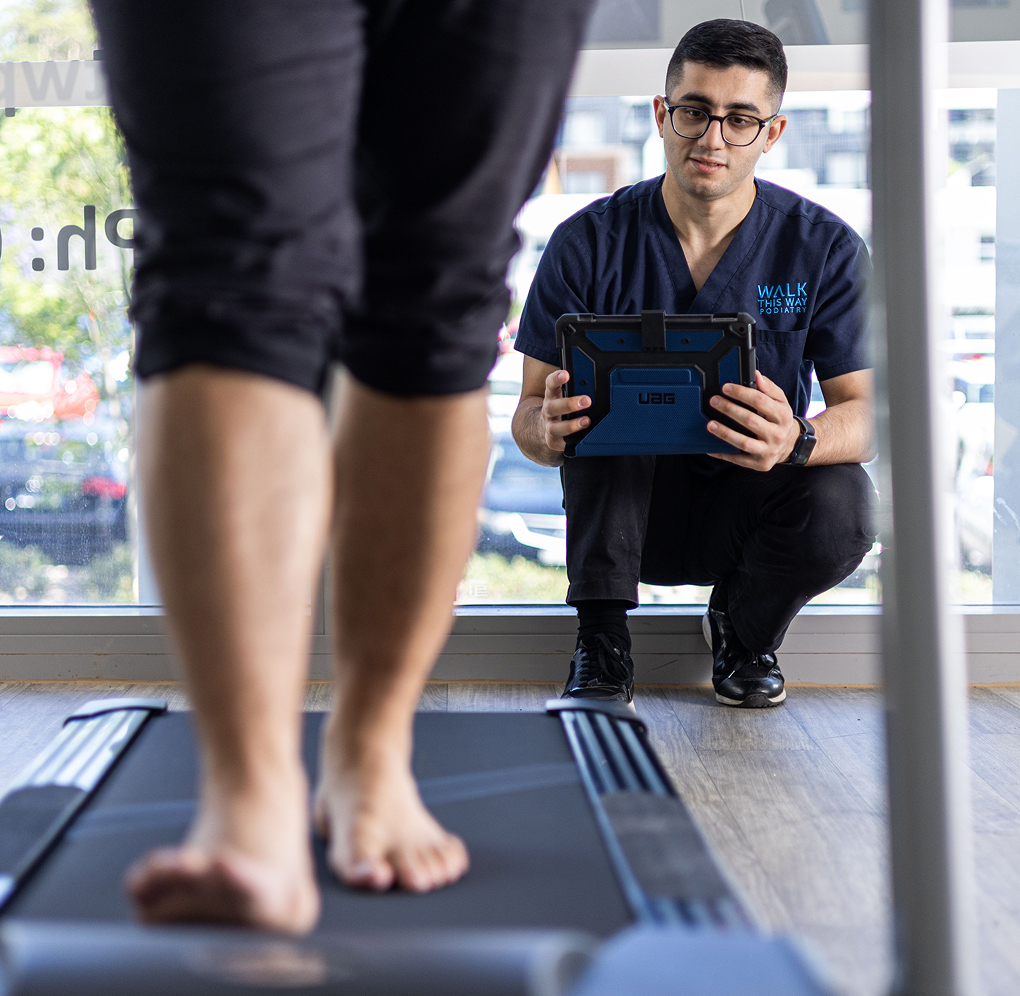
Advanced Video Gait Analysis
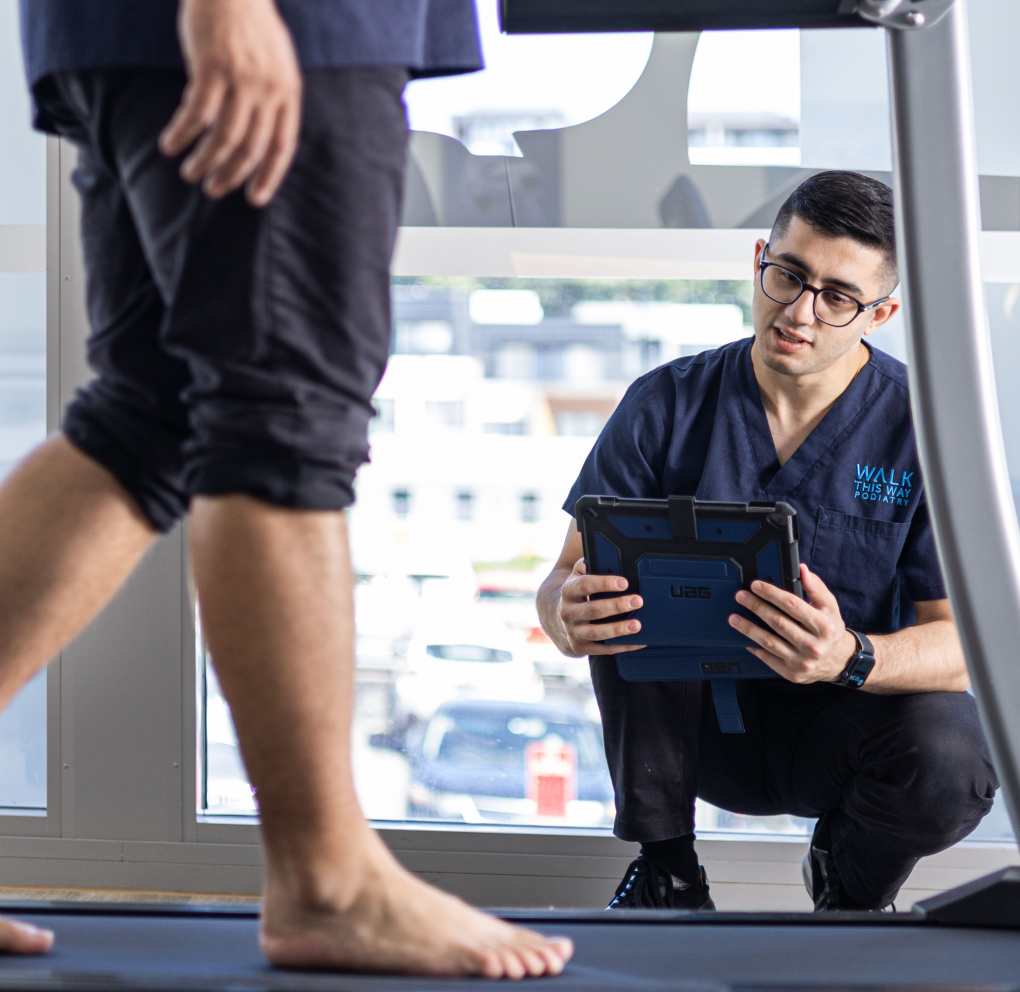
Static images don’t tell the whole story. We use high-speed video to analyze your foot strike and transition phases while you move. This allows us to see if your arch is collapsing (over-pronation) or if your calf muscles are too tight to allow for a natural stride.
3D Digital Foot Scanning
If structural support is required, we use 3D laser scanning technology. This creates a digital map of your foot accurate to within 0.1mm. This is far superior to old-fashioned plaster casts or “stepped-on” foam boxes.
Multimodal Treatment Plan
Depending on the severity, your plan may include:
Custom Orthotics
To realign the foot and reduce tension on the fascia.
Extracorporeal Shockwave Therapy (ESWT)
Using acoustic pressure waves to jumpstart the body’s healing response in chronic tissue.
Strengthening Protocols
Targeted exercises to build intrinsic foot muscle strength.
Footwear Prescription
We guide you on which brands and models of shoes (from running shoes to corporate wear) best suit your specific foot type.
If you are suffering from heel pain and are concerned about this debilitating condition, book an appointment today.
Frequently Asked Questions
Why is heel pain worse in the morning?
During sleep, your foot rests in a pointed (plantar-flexed) position, causing the fascia to contract and tighten. When you take your first step, the fascia is suddenly stretched, causing micro-tears in the stiffened tissue. As you move, the tissue warms up and the pain may subside, only to return after long periods of sitting.
Can I use a tennis ball to roll out my foot?
While rolling a ball under your foot can provide temporary symptomatic relief by massaging the fascia, it does not address the underlying biomechanical cause. If you have “flat feet” or poor gait mechanics, the ball will not fix the issue, and the pain will return once the massage effect wears off.
Do heel spurs cause pain?
Interestingly, heel spurs themselves are rarely the source of pain. They are usually a result of long-term tension from the plantar fascia pulling on the bone. Many people have heel spurs and feel no pain, while others have severe pain with no spur visible on X-ray.
How long does it take for plantar fasciitis to heal?
With professional intervention, most patients see significant improvement within 4 to 6 weeks. However, complete tissue remodeling can take 3 to 6 months. Early treatment is key; chronic cases (longer than 6 months) often require more intensive therapy like Shockwave.
Are expensive running shoes enough to fix the problem?
Not necessarily. While a “stable” shoe helps, shoes are mass-produced for a general foot shape. If your heel pain is caused by a specific structural misalignment, even the best $300 running shoe won’t provide the targeted support that a custom orthotic can.
Is shockwave therapy painful?
Shockwave therapy is non-invasive and generally well-tolerated. It feels like a rapid tapping or “poking” sensation. Your podiatrist can adjust the intensity to your comfort level. The primary benefit is that it requires no downtime or injections.
Should I stop exercising while my heel heals?
We rarely recommend total rest. Our goal at Walk This Way Podiatry is to keep you “active.” We usually suggest “load management”—modifying your activity (e.g., cycling instead of running) while we address the mechanics, so you don’t lose your fitness.
Is plantar fasciitis the same as a bruised heel?
No. A bruised heel (fat pad contusion) is usually caused by a single impact, like jumping from a height. Plantar fasciitis is an overuse injury that develops over time.
Can my weight affect my heel pain?
Yes. Increased body mass places more vertical pressure on the arches during every step. However, even very thin, fit athletes suffer from this condition due to poor mechanics. Weight is a factor, but biomechanics is the primary driver.
Do I need surgery for heel pain?
Surgery (plantar fascia release) is considered a last resort and is successful in only a small percentage of cases. Over 95% of our patients achieve full recovery using non-surgical, conservative management.


What people are saying about us…
Hundreds of patients in the Inner West and Sydney North have trusted us to treat their foot problems. We take great pride in our reputation and the reviews our patients leave us are testimony to that.
See what our patients say about their results on Google and Facebook, then book your own Biomechanical Assessment to experience the difference.