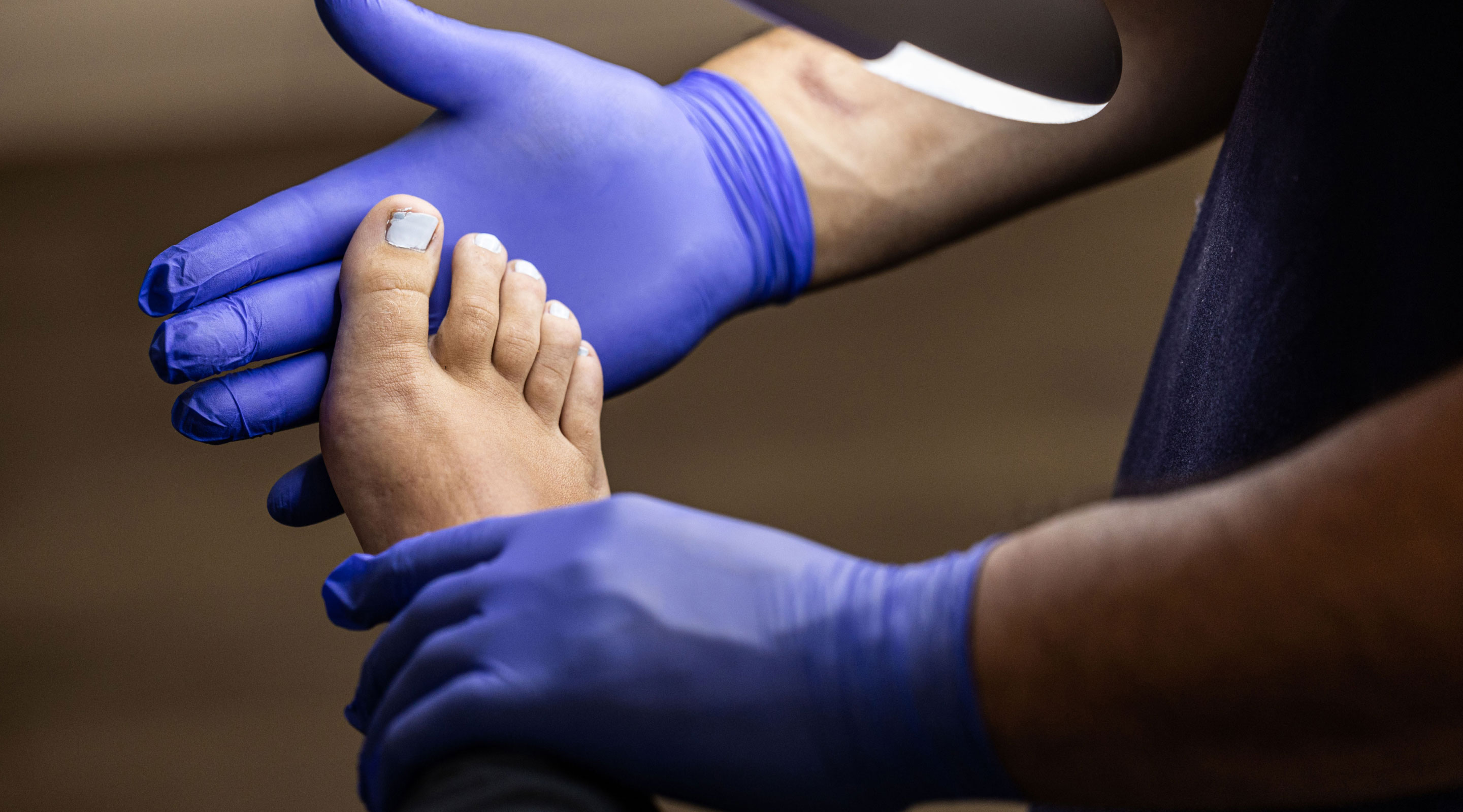
Instant Relief for Painful Ingrown Toenails
An ingrown toenail (Onychocryptosis) is more than just a minor nuisance—it can be a debilitating condition that makes even the light pressure of a bedsheet feel unbearable. If you are experiencing redness, swelling, or a sharp, throbbing pain in your toe, you need more than a “quick fix” at home.
At Walk This Way Podiatry, we provide expert ingrown toenail care for patients across Putney, Haberfield, and the Greater Sydney region. From gentle conservative clearing to permanent, pain-free surgical solutions, our goal is to eliminate your pain and prevent the infection from returning.
Why Do Toenails Become Ingrown?
Understanding the cause of your ingrown nail is the first step toward a permanent cure. While some people are genetically predisposed to curved (“involuted”) nails, most cases are caused by a combination of external factors:
Improper Trimming
Cutting nails too short or tapering the corners can encourage the nail to grow into the skin.
Ill-fitting Footwear
Tight shoes or high heels compress the toes together, forcing the nail plate into the surrounding flesh.
Trauma
Stubbing your toe or having someone step on it can shift the nail’s growth alignment.
Activity Levels
Athletes and runners are at higher risk due to the repetitive “micro-trauma” of the toe hitting the front of the shoe.
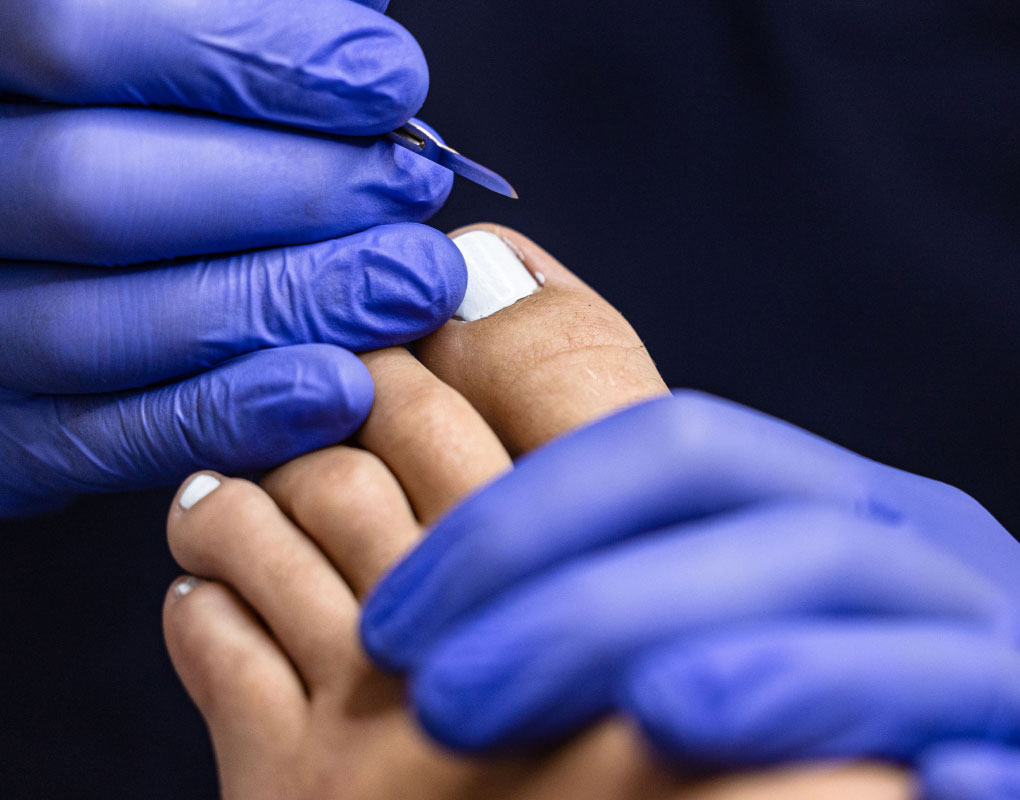
Need urgent relief? book an appointment today.
The Risks of "Bathroom Surgery"
We often see patients in our Sydney clinics who have attempted to fix the problem themselves using bathroom tweezers or clippers. We strongly advise against this. Attempting “bathroom surgery” usually leaves a small spike of nail deeper in the tissue, which acts like a splinter, driving the infection further in. Furthermore, the risk of secondary bacterial infection (cellulitis) is high when non-sterile tools are used. If you see pus, or if the redness is spreading up your foot, this is a clinical emergency that requires professional podiatric intervention.
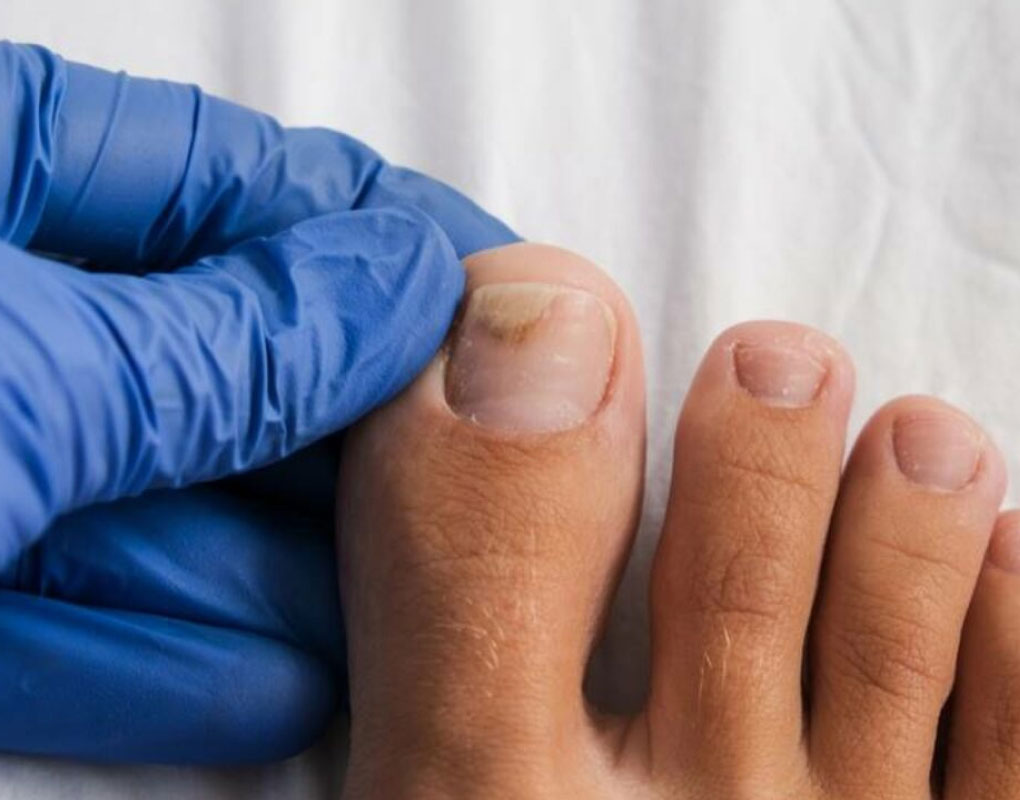
Our Treatment Options From Gentle to Permanent
Conservative Management (Non-Surgical)
If the nail is caught early, our podiatrists can often clear the offending edge painlessly during a standard consultation. We use specialized, sterile instruments to lift and trim the nail spike, providing instant relief without the need for anesthetic.
PNA: The Permanent Surgical Solution
For recurring ingrown nails, we offer a Partial Nail Avulsion (PNA). This is a minor, in-clinic procedure performed under local anesthetic.
The Procedure
We remove only the narrow sliver of nail that is digging into the skin.
The Cure
We apply a chemical called Phenol to the nail matrix (the root) to prevent that specific section of the nail from ever growing back.
The Result
The nail looks almost completely normal, but the “spike” is gone forever.
What to Expect During Your Ingrown Toenail Appointment
We understand that many patients are nervous about their toes being touched. Our clinical pathway is designed for maximum comfort:
Assessment
We check for signs of infection and assess your vascular health to ensure safe healing.
Pain Management
If the toe is too sore to touch, we can administer a local anesthetic “toe block” so you feel absolutely nothing during the treatment.
Sterile Environment
Unlike a nail salon, we operate in a clinical environment with 100% sterilised equipment to eliminate the risk of cross-infection.
Aftercare
You will receive a comprehensive dressing pack and a follow-up appointment to ensure the site is healing perfectly.
Need urgent relief? book an appointment today.
Frequently Asked Questions
How do I know if my toenail is infected?
Key signs of infection include localised heat, persistent throbbing, yellow or white discharge (pus), and an overgrowth of “angry” red skin called granulation tissue. If you see red streaks moving up your foot, seek medical attention immediately.
Is ingrown toenail surgery painful?
The procedure itself is completely painless. We use a local anesthetic to numb the toe entirely. Most patients are surprised at how quick and easy the process is, often describing the numbing sensation as the only “pinch” they felt.
How long is the recovery after nail surgery?
Most patients can return to work or school the very next day. You will need to wear open-toed shoes or loose sneakers for a few days to accommodate the dressing, but most people experience significantly less pain 24 hours after the surgery than they did before it.
Will my toenail look weird after a PNA surgery?
Not at all. We only remove about 2–3mm of the nail edge. Once the skin heals, the nail simply looks slightly narrower. Most people wouldn’t even notice you’ve had surgery.
Can I go swimming after toenail surgery?
You must keep the dressing dry for the first few days. We typically recommend avoiding swimming in pools, the ocean, or using hot tubs for 1–2 weeks to prevent infection while the “gap” where the nail was removed closes up.
Does Medicare cover podiatry for ingrown toenails?
Podiatry is generally covered by private health insurance (Extras). If you have a Chronic Disease Management (CDM) plan from your GP, you may be eligible for a Medicare rebate for your initial assessment.
Can an ingrown toenail go away on its own?
Rarely. Once a nail spike has pierced the skin, it acts as a foreign body. The skin will continue to react and inflame until the physical obstruction (the nail) is professionally removed.
Why does my child keep getting ingrown toenails?
Children often get ingrown nails due to “sweaty feet” (which softens the skin, making it easier for the nail to pierce) or because they are rapidly outgrowing their shoes and socks, causing compression.
What is the difference between an ingrown nail and a fungal nail?
An ingrown nail is a structural issue where the nail pierces the skin. A fungal nail is an infection within the nail plate itself, making it thick, yellow, and crumbly. However, fungal nails can become ingrown because they become distorted and difficult to trim.
How soon can I run after having a nail removed?
We usually recommend taking 1 week off high-impact sports like running or football to allow the initial healing to take place without the risk of the wound re-opening.
What people are saying about us…
Hundreds of patients in the Inner West and Sydney North have trusted us to treat their foot problems. We take great pride in our reputation and the reviews our patients leave us are testimony to that.
See what our patients say about their results on Google and Facebook, then book your own Biomechanical Assessment to experience the difference.