Why Every Step Feels Like a Struggle
Whether you are a runner taking on the Bay Run or a professional walking the streets of the Sydney CBD, your Achilles tendon is the powerhouse of your movement. It is the thickest and strongest tendon in the human body, but it is also one of the most susceptible to overuse.
At Walk This Way Podiatry, we see many patients in Putney and Haberfield who describe a similar feeling: a tight, “snapping” sensation at the back of the heel or a deep ache in the calf that simply won’t go away with rest. Because we focus on Active Lives, we know that telling you to “just stop moving” isn’t a viable solution. Our approach is designed to keep you mobile while we treat the underlying cause of your Achilles and calf pain.
Understanding Achilles Tendonitis vs. Tendinopathy
In the medical world, terminology matters because it dictates the treatment.
Achilles Tendonitis
This refers to acute inflammation. It’s often what happens when you’ve suddenly increased your training load—perhaps a weekend of intense hiking or a new “Couch to 5K” program.
Achilles Tendinopathy
This is the more chronic version. If your pain has lasted more than six weeks, the tendon may be undergoing structural changes (degeneration) rather than just inflammation.
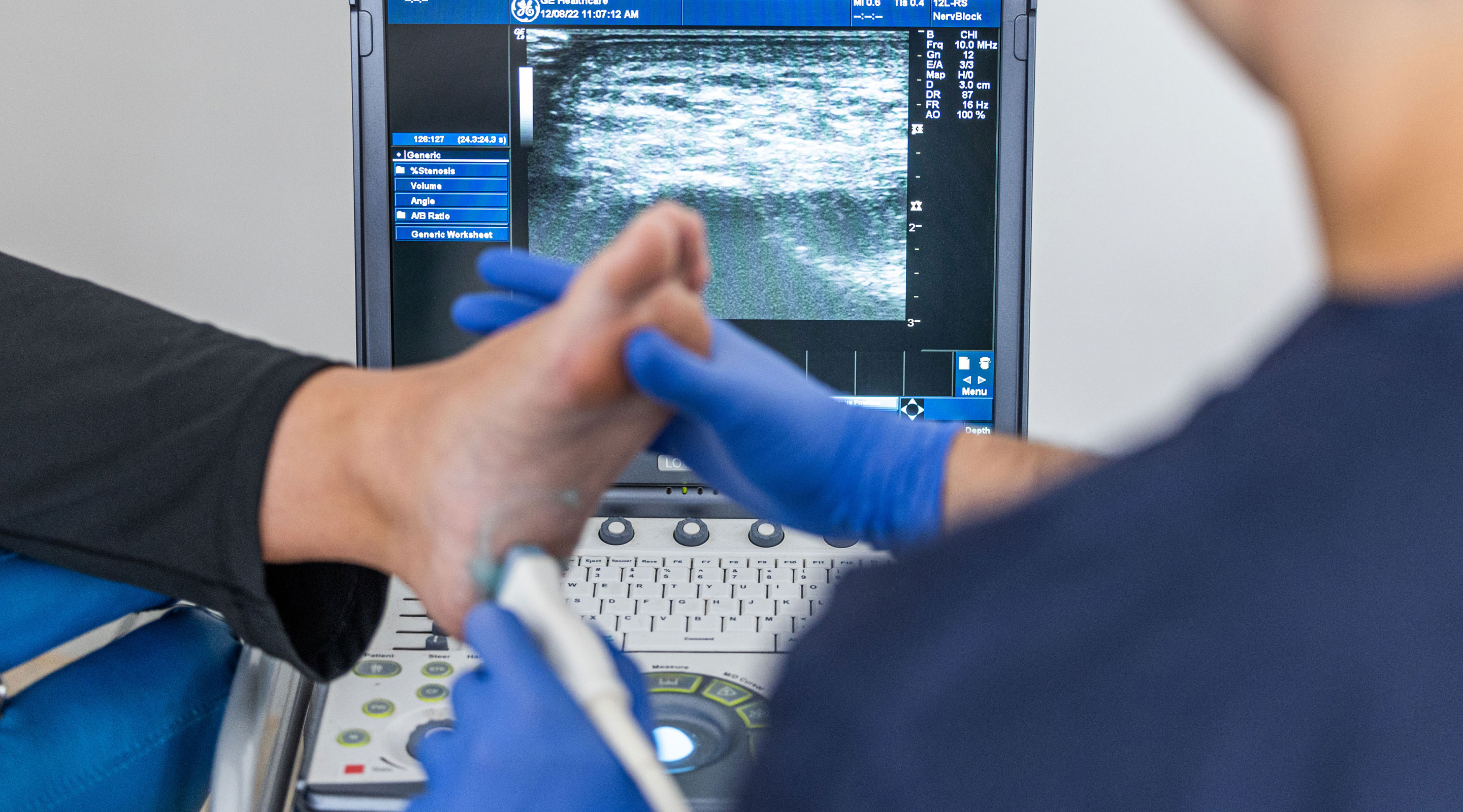
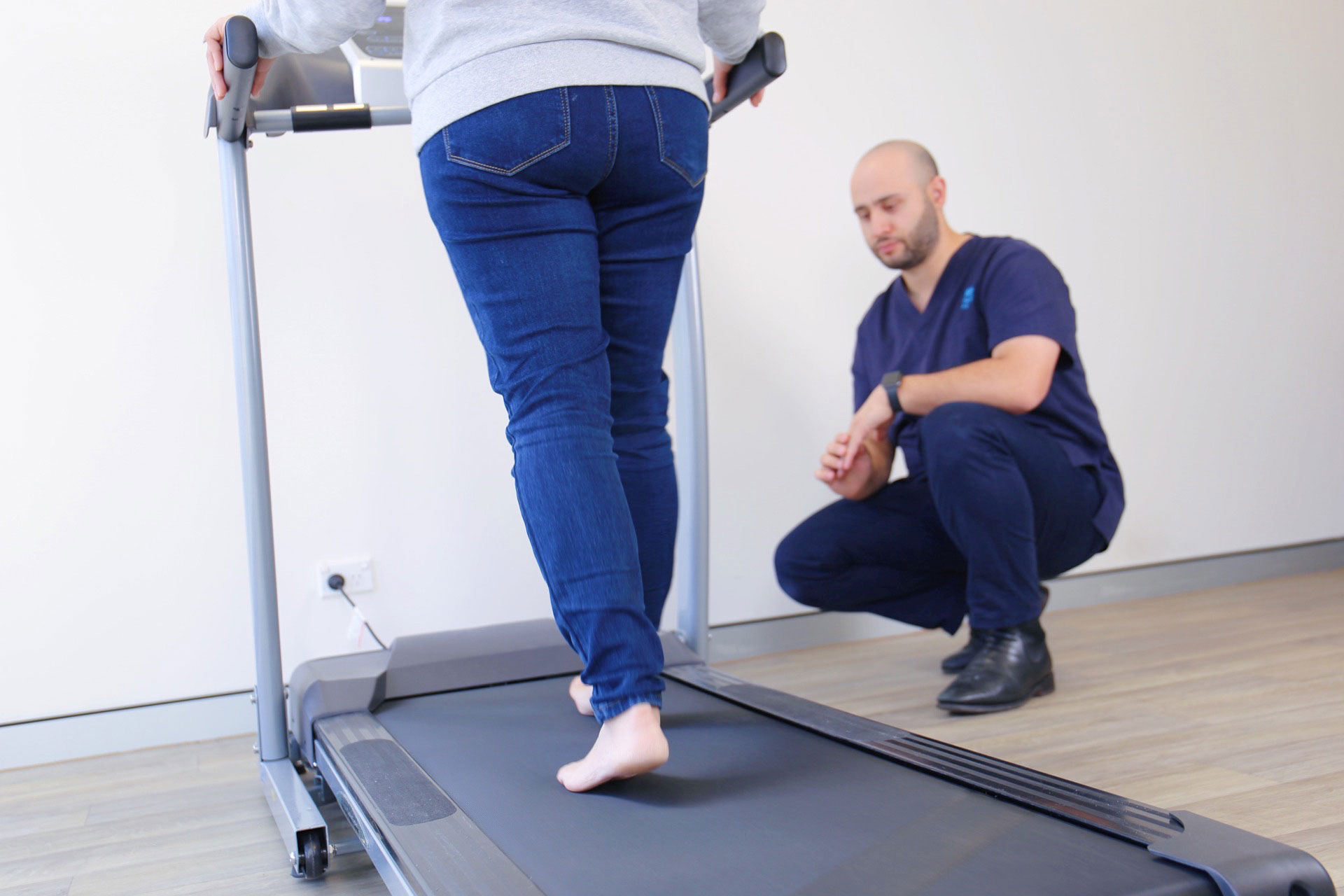
If you treat chronic tendinopathy with only anti-inflammatories, you are missing the mark. The tendon needs specific “loading” exercises to rebuild its strength. At our Sydney clinics, we use [Video Gait Analysis] to determine exactly which stage of the injury you are in.
Ready to get back to running pain-free? book an appointment today.
Common Symptoms Is Your Calf Tight or Injured?
Many patients confuse a simple calf strain with Achilles issues. Here is how to tell the difference:
Morning Stiffness
If you feel like you are walking on “stilts” for the first 10 minutes after waking up, that is a classic sign of Achilles involvement.
The “Warm-Up” Effect
Does the pain go away once you start walking, only to return with a vengeance after you sit down for a coffee? This is typical of tendon issues.
Point Tenderness
A sharp pain specifically 2–6cm above the heel bone often indicates mid-portion tendinopathy.
Calf Weakness
Difficulty performing a single-leg calf raise is a red flag that the muscle-tendon unit is failing to handle your body weight.
The Root Causes Why Did This Happen?
At Walk This Way Podiatry, we don’t just look at where it hurts; we look at why it happened. Common drivers of Achilles pain include:
Over-pronation
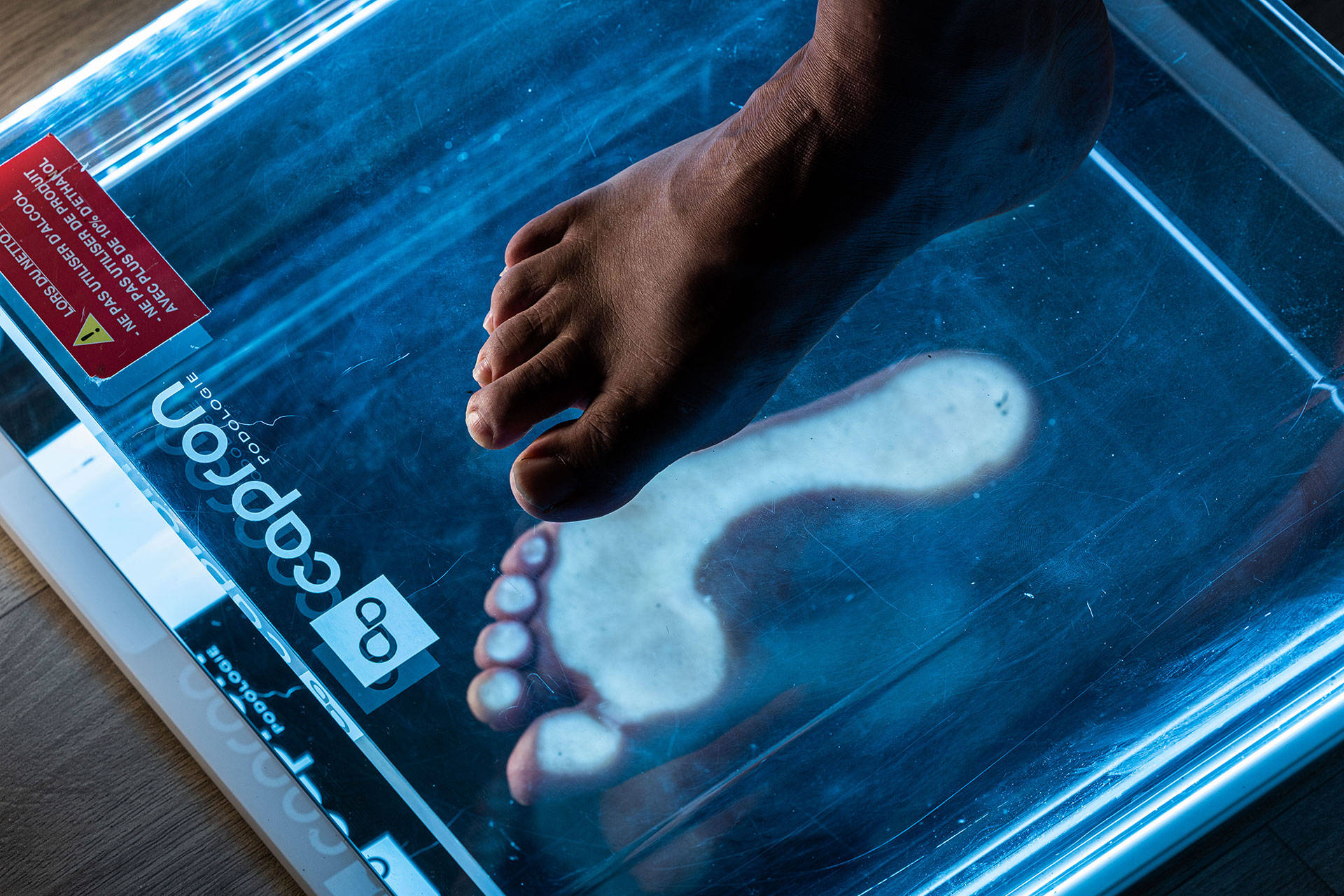
If your feet roll inward excessively, it creates a “wringing” effect on the Achilles tendon, cutting off blood supply and causing micro-tears.
Poor Footwear
Switching from a supportive office shoe to a flat, unsupportive sneaker for your evening walk can place immediate, excessive strain on the tendon.
Tight Calf Muscles
If the Gastrocnemius and Soleus muscles are tight, they act like a permanent “anchor,” pulling on the Achilles even when you are at rest.
TOur Treatment Pathway for Sydney Athletes
We utilise a multi-phased approach to get you back to your peak performance:
Phase 1: Pain Reduction & Offloading
We may use [Custom Orthotics] or temporary heel lifts to reduce the physical stretch on the tendon. This provides immediate relief and allows the initial “flare-up” to settle.
Phase 2: Extracorporeal Shockwave Therapy (ESWT)
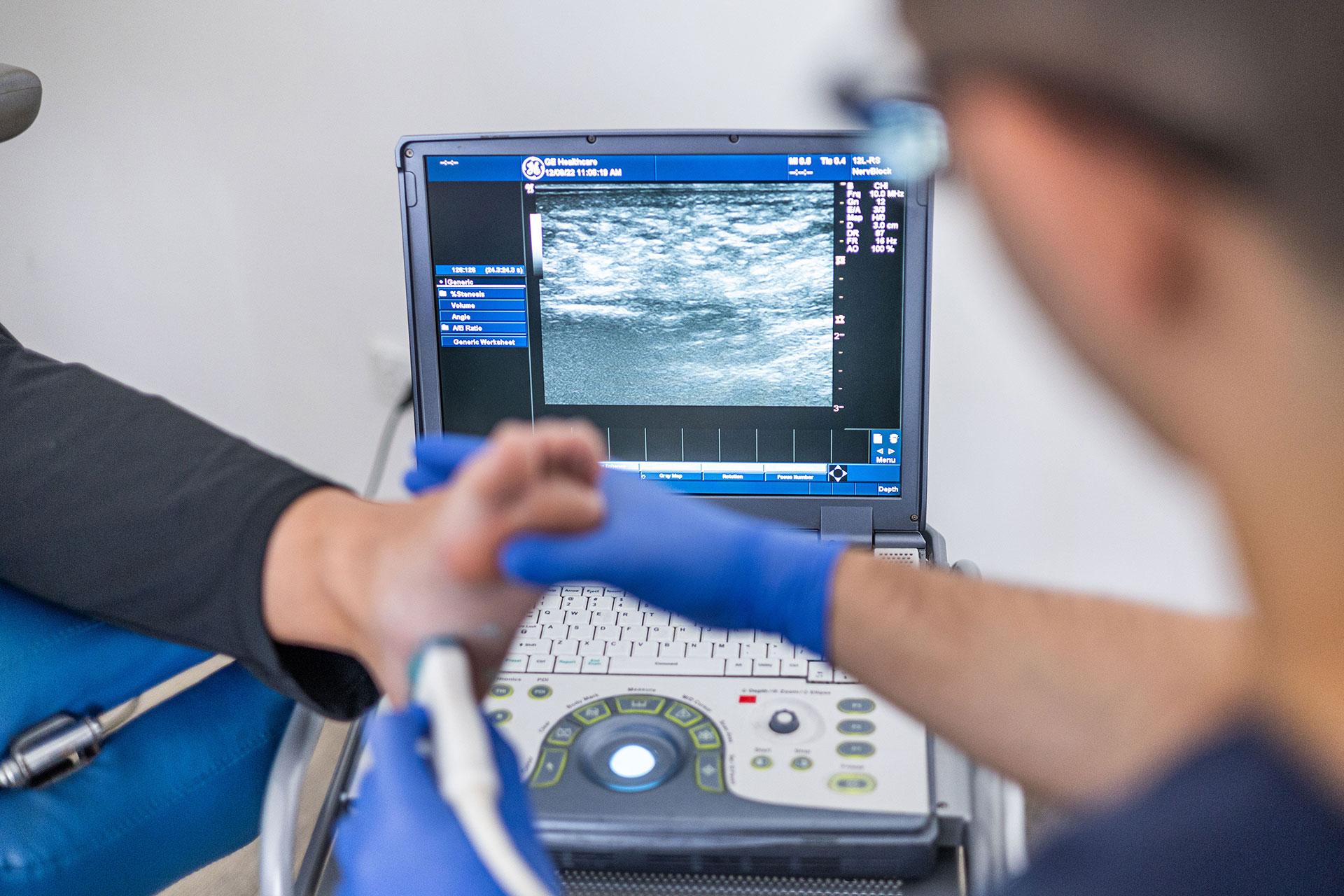
For chronic cases, we offer Shockwave Therapy. This technology sends acoustic waves into the tendon to stimulate blood flow and trigger a healing response in tissue that has otherwise “stalled.” It is a non-invasive alternative to injections or surgery.
Phase 3: Targeted Loading Protocols
Tendons actually crave load—but it has to be the right kind. We prescribe specific “eccentric” and “isometric” exercises that help the tendon fibers realign and strengthen.
Ready to get back to running pain-free? book an appointment today.
Frequently Asked Questions
Should I stretch my Achilles if it’s sore?
Counter-intuitively, aggressive stretching can actually make insertionalAchilles pain worse by “compressing” the tendon against the heel bone. It is vital to get a diagnosis first to know if you should be stretching or strengthening.
Can I keep running with Achilles pain?
In many cases, yes—but we need to manage the “load.” We often allow patients to continue running if their pain level stays below a 3/10 and doesn’t worsen the next morning. We help you create a “return-to-run” plan.
Is a calf strain the same as Achilles tendonitis?
No. A calf strain is a tear in the muscle fibers (higher up), while tendonitis is an issue with the connective tissue (lower down). However, a weak calf is often the primary cause of an Achilles injury.
How long does it take for Achilles tendonitis to heal?
Mild, acute cases can settle in 2–6 weeks. Chronic tendinopathy, where the tendon structure has changed, can take 3–6 months of consistent rehabilitation to fully remodel.
What happens if I ignore the pain?
The tendon can become increasingly degenerate and thick (developing a “nodule”). In extreme cases, a weakened, untreated tendon can suffer a full rupture, which often requires surgery and months of immobilization in a boot.
Do I need an MRI for my Achilles?
Usually, no. An experienced podiatrist can diagnose Achilles issues through a physical exam and biomechanical assessment. We only refer for imaging if we suspect a tear or if the condition isn’t responding to standard treatment.
Why does my pain get worse in cold weather?
Tendons have a poor blood supply compared to muscles. Cold weather can reduce circulation even further and make the tissue less elastic, increasing the risk of irritation during activity.
Can orthotics help Achilles pain?
Absolutely. If your pain is caused by biomechanical issues like over-pronation or “flat feet,” [Custom Orthotics] can realign the foot and take the “twist” off the Achilles tendon.
What is the "bump" on the back of my heel?
This is often a “Haglund’s Deformity” or a bone spur. It can rub against the tendon and cause insertional tendonitis. We can treat this by offloading the area and changing footwear mechanics.
Is Shockwave Therapy better than cortisone injections?
Current research suggests that Shockwave Therapy is superior for long-term tendon health. Cortisone may provide fast relief but can actually weaken the tendon tissue over time, increasing the risk of rupture.
What people are saying about us…
Hundreds of patients in the Inner West and Sydney North have trusted us to treat their foot problems. We take great pride in our reputation and the reviews our patients leave us are testimony to that.
See what our patients say about their results on Google and Facebook, then book your own Biomechanical Assessment to experience the difference.