Why “Flat Feet” is Often Misunderstood
In our Sydney clinics, we frequently meet patients who have been told they have “flat feet” as if it’s a permanent, unchangeable diagnosis. But having a low arch (Pes Planus) isn’t necessarily a problem—unless it leads to pain, fatigue, or secondary injuries.
At Walk This Way Podiatry, we distinguish between a naturally low arch and fallen arches (Adult Acquired Flatfoot Deformity). Whether you’ve had flat feet since childhood or you’ve noticed your arches collapsing as you’ve aged, our goal is to restore the “spring” in your step. By focusing on your biomechanics, we help residents in Putney and Haberfield stay active, whether they’re walking the dog along the Parramatta River or training for their next marathon.
This guide explores the root causes of heel pain, why common “home fixes” often fail, and how our clinical approach in Putney and Haberfield provides long-term resolution.
Flexible vs. Rigid: What Kind of Flat Foot Do You Have?
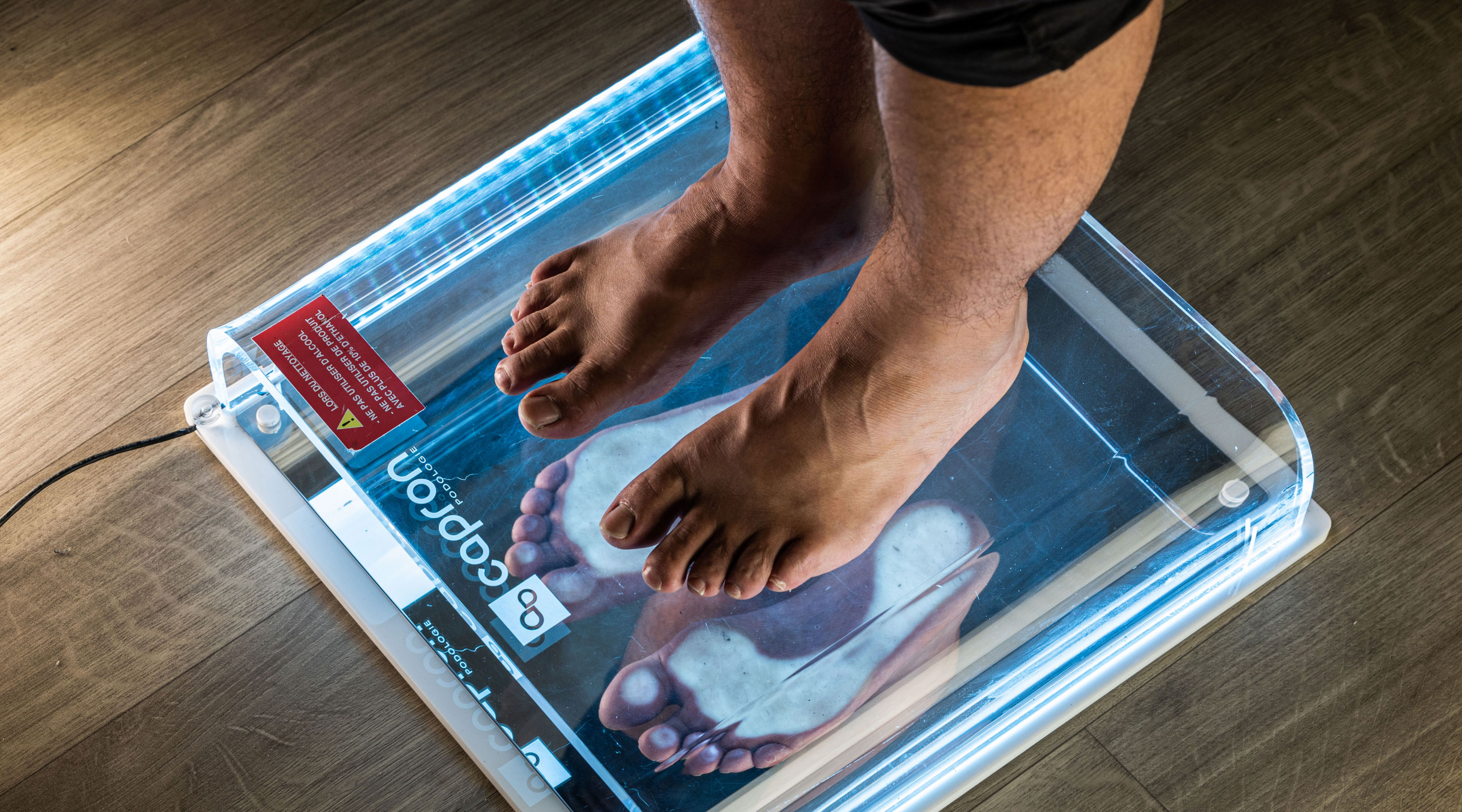
The first thing our podiatrists determine during a [Biomechanical Assessment] is the type of flat foot you have. This dictates the entire treatment plan.
Flexible Flat Foot
This is the most common type. You have a visible arch when you sit or stand on your tiptoes, but the moment you put weight on your foot, the arch disappears. This is often caused by ligament laxity.
Rigid Flat Foot
The arch is absent whether you are weight-bearing or not. This is often due to structural bone issues (like a tarsal coalition) or advanced arthritis and requires a more specialised support strategy.
Adult Acquired Flatfoot (PTTD)
This occurs when the Posterior Tibial Tendon—the main “suspension cable” for your arch—becomes weakened, stretched, or torn. This is a progressive condition that needs urgent clinical attention to prevent long-term deformity.
Ready to support your arches? book an appointment today.
The Agitation How "Fallen Arches" Affect Your Whole Body
Your feet are the foundation of your skeletal house. When the arch collapses, it’s like a foundation sinking on one side—the rest of the structure must shift to compensate.
Overpronation
As the arch falls, the foot rolls inward. This forces the lower leg to rotate internally.
Knee & Hip Stress
This internal rotation puts “torsion” (a twisting force) on the knee joint and shifts the alignment of the pelvis.
The “Too Many Toes” Sign
When viewed from behind, a person with a collapsing arch will have their foot turn outward so much that you can see their outer toes—a clinical red flag we look for.
Chronic Fatigue
Flat feet are mechanically inefficient. Your muscles have to work twice as hard to stabilise your body, leading to that “heavy, achy” feeling in your legs by 3:00 PM.
Our Treatment Roadmap: Lifting the Arch, Restoring the Walk
We don’t just “put a wedge in your shoe.” We use a sophisticated clinical pathway:
Precision Gait Analysis
We use high-speed [Video Gait Analysis] to see if your arch collapse is happening during the “landing,” “mid-stance,” or “push-off” phase of your walk.
Custom Orthotics: The Modern Solution
Unlike generic “arch supports” from a chemist, our [Custom Orthotics] are engineered using 3D laser scans. They are designed to act as a functional “brace” for your foot, controlling the rate of pronation and offloading the stressed tendons.
Posterior Tibial Tendon Rehab
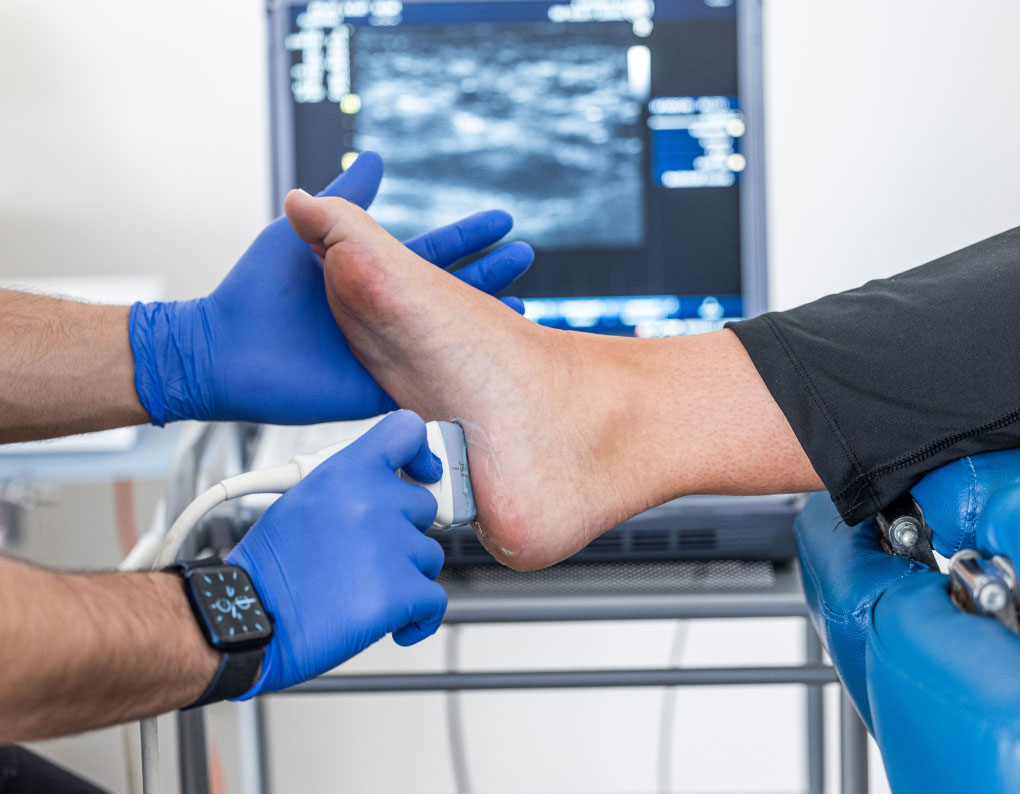
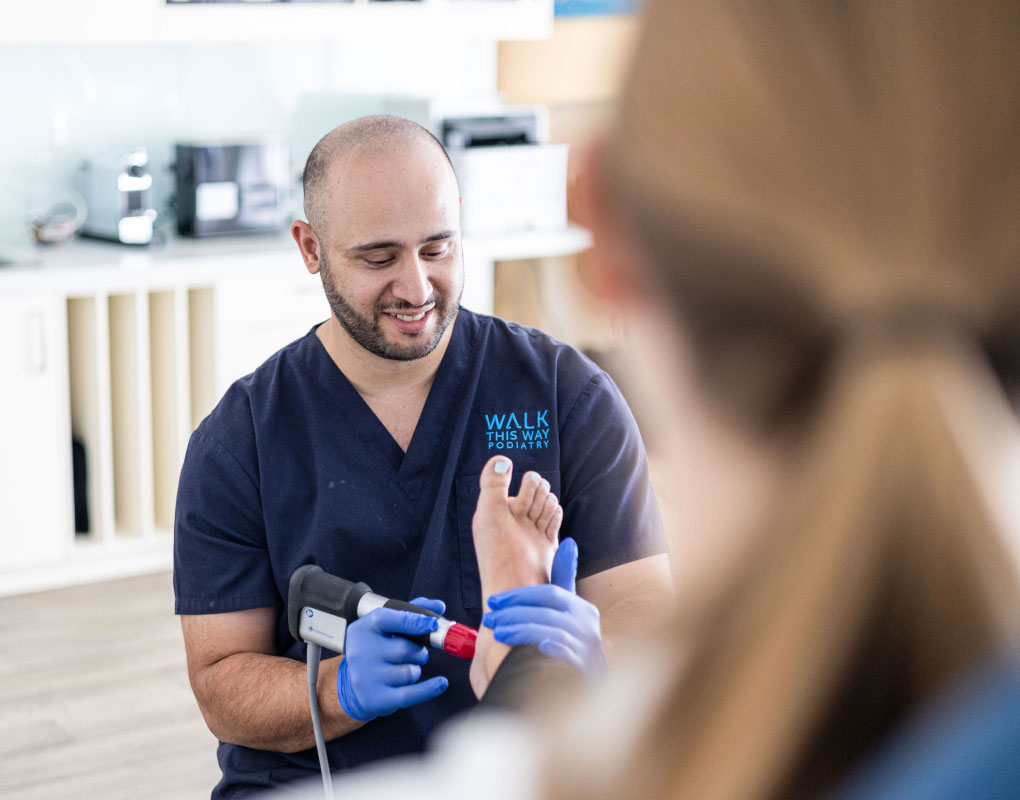
If your flat feet are caused by a failing tendon, we prescribe specific strengthening protocols. We may also use Shockwave Therapy (as discussed in our [Achilles Tendonitis] section) to stimulate healing in the tendon tissue.
Footwear Engineering
A flat foot in a “floppy” shoe is a recipe for disaster. We provide specific footwear prescriptions for Sydney professionals and athletes, ensuring your shoes have the right “torsional stability” to support our clinical work.
Ready to support your arches? book an appointment today.
Frequently Asked Questions
Is it possible to "fix" flat feet with exercise?
If the flat foot is flexible, exercises to strengthen the intrinsic foot muscles and the posterior tibial tendon can improve your foot’s function and reduce pain. However, exercises alone rarely change the physical height of a bone-deep arch in an adult.
Why am I only developing flat feet now as an adult?
Adult-onset flat feet are often caused by “Posterior Tibial Tendon Dysfunction” (PTTD). Factors like sudden weight gain, pregnancy, or years of wearing unsupportive footwear can cause the tendon to stretch and the arch to eventually “drop.”
Do all flat feet need orthotics?
No. If you have flat feet but experience no pain, have good muscle strength, and no secondary issues (like [Bunions]), you may not need treatment. We only intervene when the mechanics are causing damage.
Can flat feet cause lower back pain?
Yes. Because flat feet cause the legs to rotate inward, they can tilt the pelvis forward (anterior pelvic tilt), which increases the curve in the lower back and leads to chronic strain.
Is "fallen arches" the same thing as flat feet?
“Flat feet” is a general term for the shape. “Fallen arches” specifically refers to an arch that was once there but has collapsed over time due to injury or wear and tear.
Can I still wear sandals if I have flat feet?
Standard flat thongs are usually problematic. However, there are now many podiatrist-designed sandals with “built-in” arch support. We can give you a list of Sydney-based retailers that stock these.
How do I know if my child has flat feet?
Most toddlers appear to have flat feet due to a fat pad under the arch. A true arch usually develops between ages 4 and 10. If your child is tripping often or complaining of “tired legs,” it’s worth a [Children’s Foot Check].
What is the "Wet Footprint" test?
It’s a simple home test. Wet your feet and step on a dry sidewalk. A “normal” footprint has a curve on the inside. A flat foot leaves a solid, rectangular print where the entire sole has touched the ground.
Can flat feet cause "Shin Splints"?
Frequently. The muscles on the front of your shin have to work much harder to lift a “collapsed” foot during walking, leading to inflammation along the shin bone.
Do flat feet qualify for a Medicare rebate?
If your flat feet are contributing to a chronic condition (like chronic back pain or diabetes-related issues), your GP may put you on a Chronic Disease Management (CDM) plan, which covers part of the cost of your podiatry visits.


What people are saying about us…
Hundreds of patients in the Inner West and Sydney North have trusted us to treat their foot problems. We take great pride in our reputation and the reviews our patients leave us are testimony to that.
See what our patients say about their results on Google and Facebook, then book your own Biomechanical Assessment to experience the difference.