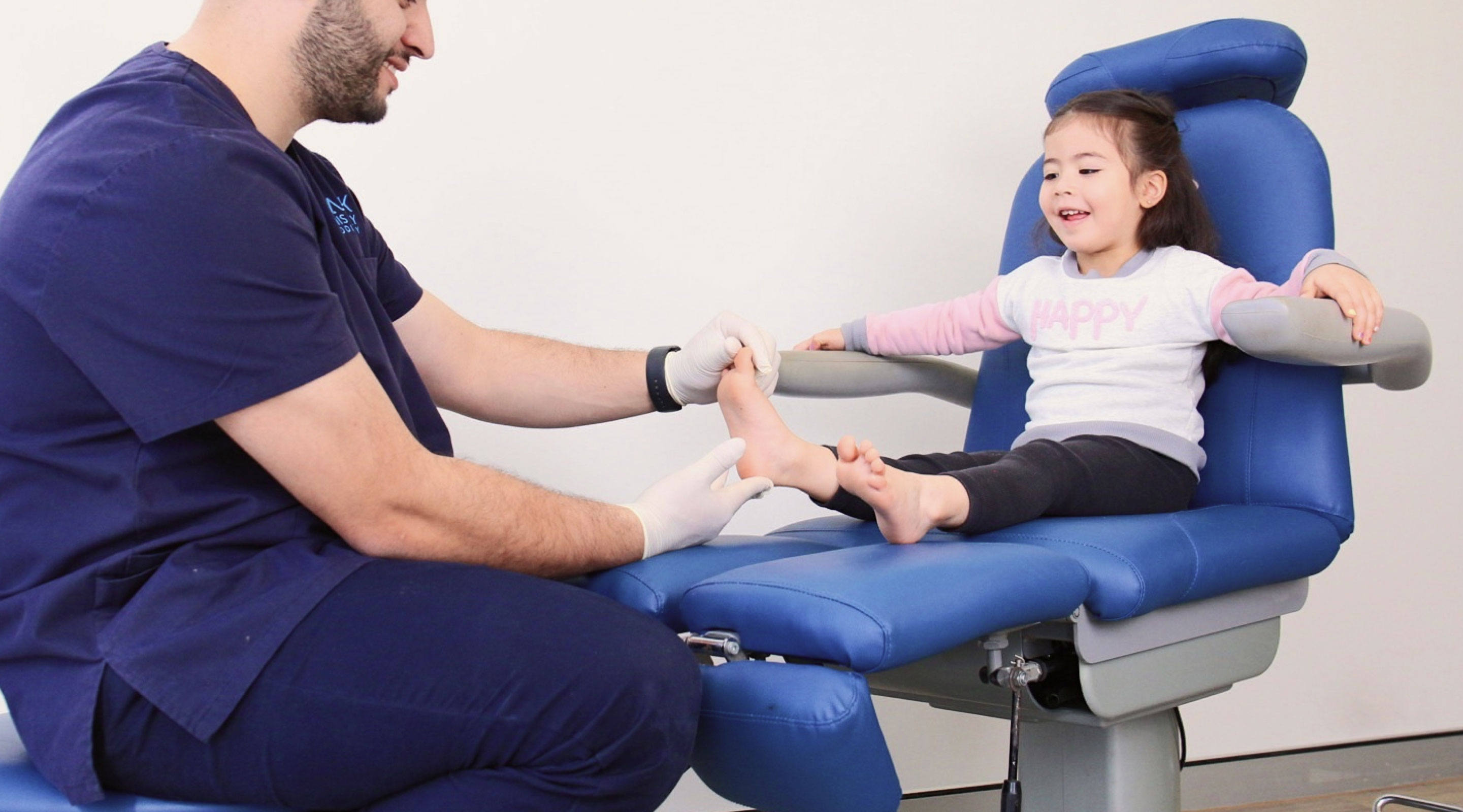
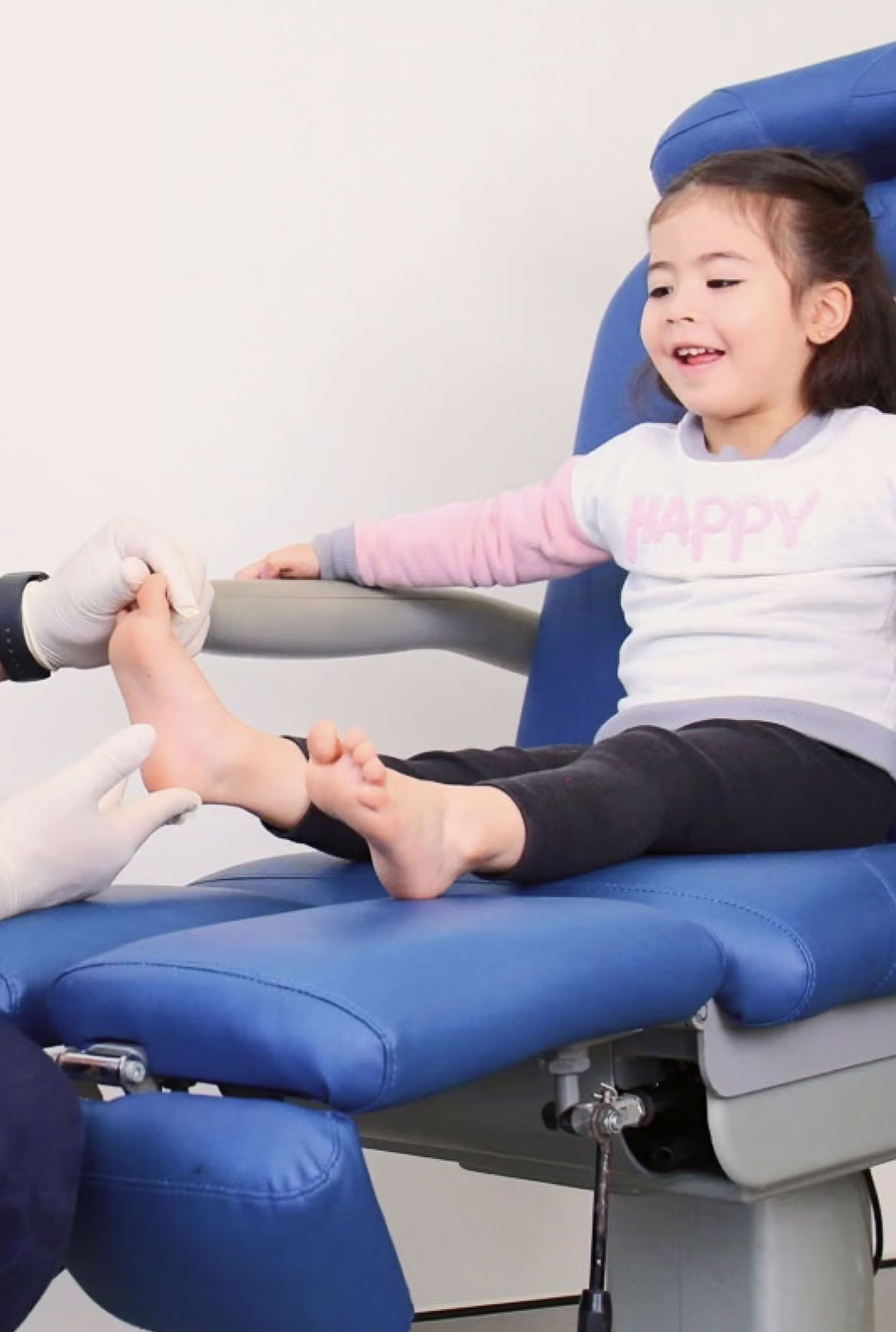
Why Early Intervention Matters for Little Feet
As a parent in Putney or Haberfield, you know that children are constantly on the move—whether it’s running around at Morrison Bay Park or playing weekend sports. However, because children’s bones are soft and still developing, children’s foot problems can arise quickly and impact their posture, coordination, and confidence.
At Walk This Way Podiatry, we specialize in pediatric foot care. We often hear parents say, “I thought they would just grow out of it.” While some developmental stages are normal, persistent pain or unusual walking patterns shouldn’t be ignored. Our “Active Lives” approach ensures your child’s foundation is set for a lifetime of healthy movement.
Common Developmental Concerns: Is it Normal?
A child’s foot is not just a small version of an adult foot; it is a complex, growing structure. Here are the most common concerns we treat:
Sever’s Disease (Heel Pain)
This is the most common cause of heel pain in active children aged 8–14. It isn’t a “disease” in the traditional sense, but an inflammation of the growth plate in the heel bone.
The Sign
Your child starts limping after soccer or netball, or complains of heel pain that disappears with rest.
The Solution
We use gentle offloading techniques, [Custom Orthotics], and stretching protocols to manage the tension on the growth plate.
In-Toeing (“Pigeon Toes”) & Out-Toeing
In-toeing is when a child’s feet turn inward while walking. While many children outgrow this by age 8, it can sometimes be caused by a twist in the thigh bone (femur), shin bone (tibia), or the foot itself.
The Sign
Frequent tripping, “clumsiness,” or feet that point toward each other.
The Strategy
We perform a full lower-limb assessment to find the “level” of the twist and provide corrective exercises or footwear advice.
Toe Walking
It is common for toddlers to experiment with walking on their tiptoes. However, if this persists beyond the age of 2–3, it may indicate tight Achilles tendons or sensory processing preferences.
The Risk
Persistent toe walking can lead to permanent shortening of the calf muscles and pain in the ball of the foot.
Flat Feet in Children
Almost all babies appear to have flat feet. An arch typically begins to develop between ages 4 and 6.
When to Worry
If the flat feet are associated with “tired legs,” an avoidance of sport, or if the ankles appear to roll inward significantly.
Give your child the best start, book an appointment today.
The Agitation The "Wait and See" Trap
The bones in a child’s foot don’t fully harden (ossify) until their late teens. If a child grows up with an uncorrected biomechanical issue—like severe over-pronation—their soft bones will “set” in that misaligned position.
Postural Compensation
A foot issue in childhood often becomes a knee or hip issue in adolescence.
Sporting Withdrawal
Children who experience “growing pains” often stop enjoying physical activity because it hurts, leading to long-term health and fitness consequences.
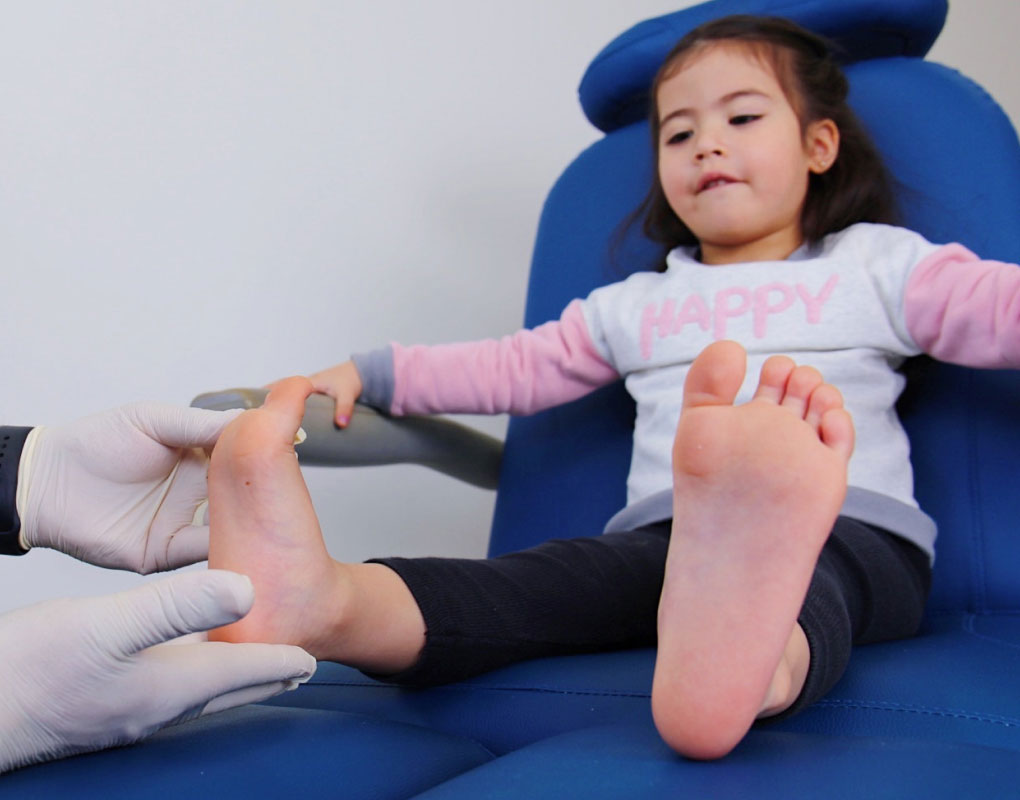
Our Pediatric Assessment Process
We make our clinics in Putney and Haberfield kid-friendly and stress-free.
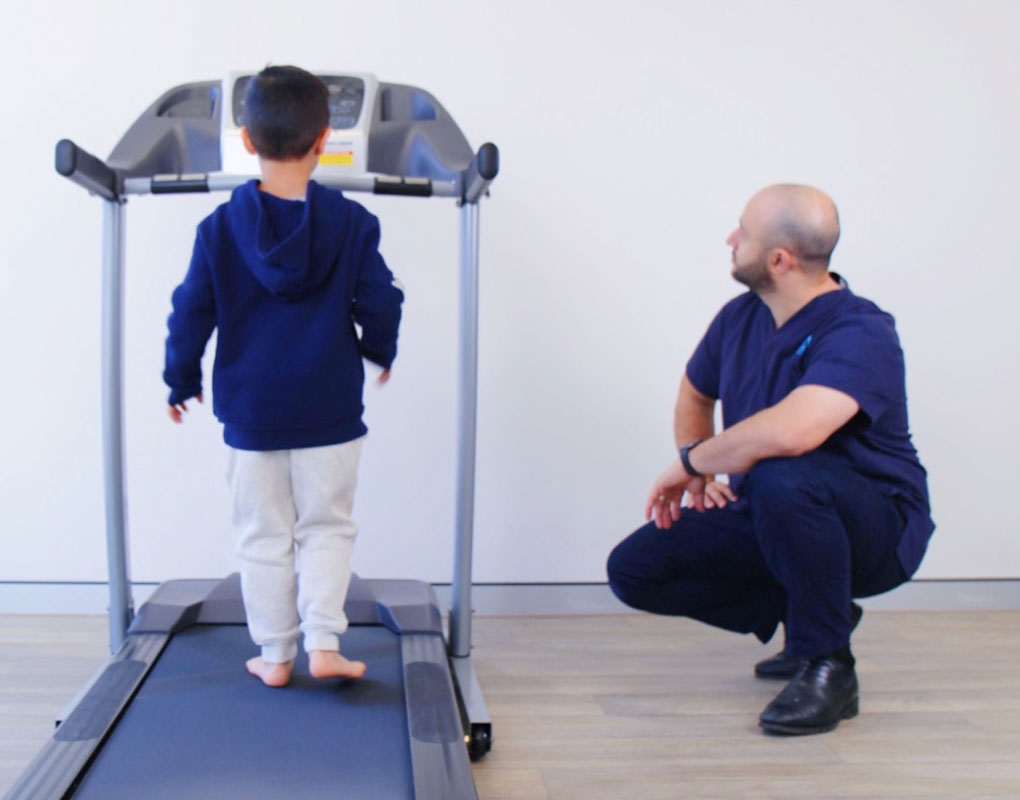
Gait Video Analysis
We use fun, engaging ways to film your child walking and running so we can analyze their movement in slow motion.
Footwear Review
Bring your child’s school shoes and sports sneakers. We check for “uneven wear patterns” which are a secret diary of how your child’s feet are working.
Joint Range of Motion
We check for hypermobility (“double-jointedness”) which can contribute to flat feet and frequent ankle sprains.
Give your child the best start, book an appointment today.
Frequently Asked Questions
What exactly are "growing pains" in the legs?
True “growing pains” usually occur at night and affect both legs. However, if the pain is localised to a joint (like the heel or knee) and happens during or after activity, it is likely a mechanical issue like Sever’s Disease or Osgood-Schlatter’s, not just growth.
At what age should my child see a podiatrist?
We recommend a “School Readiness” check around age 4 or 5. However, if you notice your child tripping frequently, limping, or having skin issues like warts at any age, you should book an assessment.
Does my child need orthotics if they have flat feet?
Not necessarily. Many children with flat feet are asymptomatic. We only prescribe [Custom Orthotics] if the flat feet are causing pain, preventing sport, or causing significant postural misalignment.
Why does my child trip over their own feet so much?
This is often due to in-toeing (pigeon toes). Because the toes point inward, they can catch on the opposite heel or the ground. A podiatric assessment can determine if this is a hip, shin, or foot-based issue.
How often should I change my child’s school shoes?
Children’s feet can grow up to half a size every 3–4 months. We recommend checking the fit at the start of every school term. There should always be about a “thumb’s width” of space at the end of the longest toe.
Can a podiatrist treat plantar warts in kids?
Yes. Warts (verrucae) are viral and can be very painful for children. We offer clinical treatments that are more effective and safer than over-the-counter acids.
Is "W-Sitting" bad for my child's feet?
Yes. Sitting in a “W” position (knees forward, feet out to the sides) can encourage internal rotation of the hips, which contributes to in-toeing and can delay the natural development of the leg bones.
Should I let my toddler walk barefoot?
Absolutely. Indoors, walking barefoot is essential for developing the intrinsic muscles of the foot and improving sensory feedback. Shoes should primarily be for protection when outdoors.
My child has "clicking" ankles. Is that a problem?
Clicking without pain is usually just gas bubbles in the joint fluid or a tendon snapping over a bone. However, if it’s accompanied by swelling or a “giving way” feeling, it needs to be assessed for ligament laxity.
Can school shoes cause ingrown toenails?
Yes. If school shoes are too narrow or too small, they crowd the toes. Combined with incorrect nail cutting, this is the leading cause of [Ingrown Toenails] in teenagers.


What people are saying about us…
Hundreds of patients in the Inner West and Sydney North have trusted us to treat their foot problems. We take great pride in our reputation and the reviews our patients leave us are testimony to that.
See what our patients say about their results on Google and Facebook, then book your own Biomechanical Assessment to experience the difference.